

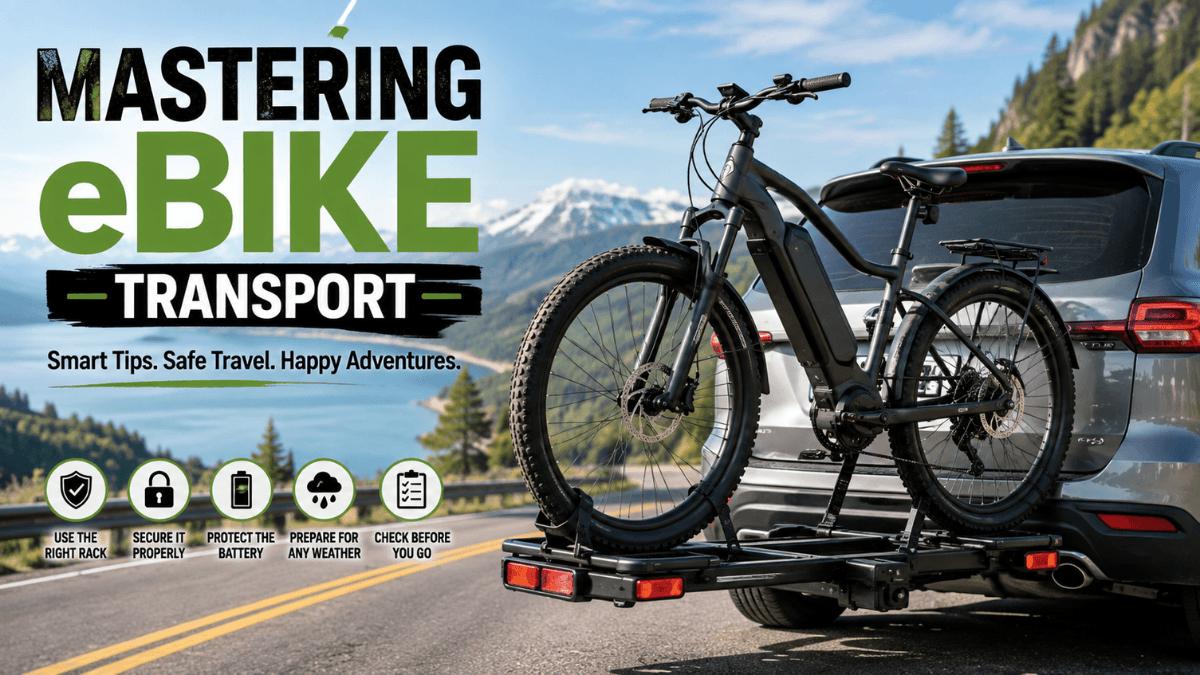
Electric bikes have made commuting, recreation, and outdoor adventures easier than ever. However, moving an eBike from one place to another requires more planning than transporting a regular bicycle. Their heavier frames, larger tires, electrical components, and batteries create a few extra considerations for safe travel.
Mastering eBike Transport means understanding how to choose the right equipment, prepare the bike, secure it correctly, and protect its electrical components. Whether you are heading to a trail, moving house, or taking an eBike on a road trip, proper preparation can prevent expensive damage.
Why Mastering eBike Transport Matters
An eBike is generally heavier than a traditional bicycle because of its motor, battery, reinforced frame, and additional electrical hardware. A rack designed only for lightweight bicycles may not safely support the extra load, especially during long journeys or on rough roads.
Mastering eBike Transport starts with recognizing these differences. Before purchasing or using a carrier, check its maximum weight rating and compare it with the actual weight of your eBike. If you are carrying two bikes, calculate their combined weight rather than checking only one.
Another important issue is stability. A poorly secured eBike can move, swing, or become damaged while the vehicle is traveling. It may also create a serious road hazard if the bike or rack becomes loose, so every attachment point deserves careful attention.
| Quick Guide | Details |
|---|---|
| Best transport option | Hitch-mounted platform rack |
| Main concern | Weight and secure mounting |
| Battery advice | Remove when practical |
| Important check | Rack and vehicle weight limits |
| Essential protection | Straps, locks, padding, and covers |
| Best practice | Check the bike before and after travel |
Choosing the Right eBike Transport Rack
A hitch-mounted platform rack is often a practical choice for heavier eBikes because it supports the bicycle by its wheels rather than requiring the frame to carry the entire load. Many models are specifically designed for heavier bicycles and wider tires.
When selecting a rack, look beyond the advertised number of bicycles it can carry. Check the maximum weight per position, total rack capacity, hitch receiver size, tire compatibility, and whether the rack can accommodate your particular frame design.
Roof racks can also transport eBikes, but lifting a heavy bicycle onto the roof can be difficult. The added height creates another concern because the vehicle becomes taller, which means drivers need to remember the bike when entering garages, parking structures, or areas with low clearance.
Preparing Your eBike Before Travel
Good preparation makes Mastering eBike Transport much easier. Begin by inspecting the tires, brakes, wheels, and frame. Remove accessories that could fall off or become damaged, such as water bottles, bags, displays, pumps, and removable lights.
The battery deserves special attention. If the manufacturer’s instructions allow removal, taking the battery off before transportation can reduce the bike’s weight and protect the battery from unnecessary vibration, weather, or temperature exposure.
Store a removable battery in a suitable protective case or container according to the manufacturer’s recommendations. Avoid leaving it loose inside a vehicle where it can slide around or become exposed to excessive heat.
How to Secure an eBike Correctly
Place the eBike carefully onto the rack and make sure both wheels are properly supported. Use the rack’s wheel straps and frame retention system as instructed, ensuring that the bicycle cannot move excessively from side to side.
Do not rely on a single strap when the rack provides multiple securing points. Check every strap before departure and again after driving for a short distance. A small amount of movement can become more noticeable as speed and road vibration increase.
Mastering eBike Transport also involves protecting the frame. If a strap or rack component touches a painted surface, consider using suitable padding to prevent scratches. Keep cables, brake lines, and electrical connections away from areas where they could rub against metal.
Protecting Your eBike From Weather and Road Debris
An eBike mounted behind a vehicle can be exposed to rain, dust, mud, road salt, and debris. Electrical components should receive extra care because unnecessary exposure can shorten the life of sensitive parts.
A suitable bicycle cover can provide additional protection during transport, but it must be designed for vehicle use. A loose cover can flap against the bicycle and create scratches or place unwanted pressure on components.
Before using any cover, check the manufacturer’s recommendations. Some racks and covers are not suitable for highway speeds, while certain covers may interfere with lights or license plates.
Mastering eBike Transport on Long Trips
Long-distance travel requires more than simply attaching the bike and driving away. Stop periodically to inspect the rack, straps, wheels, and bicycle position, particularly during the first part of the journey.
Strong wind, uneven roads, heavy traffic, and frequent braking can place additional stress on the rack. A quick inspection at a safe stopping point can identify a loose strap or shifting bicycle before it becomes a larger problem.
It is also wise to keep the rack’s instructions and your eBike manufacturer’s guidance available during travel. Different bikes have different frame designs, battery systems, and recommended handling procedures.
Transporting an eBike Inside a Vehicle
If your vehicle has enough interior space, transporting an eBike inside can offer protection from weather and road debris. However, the bike should still be secured so it cannot slide, tip over, or damage other belongings.
Remove the battery and other detachable components when appropriate. Folding seats or removing wheels may make the bike easier to fit, but never force the frame into a position that could damage the motor, cables, display, or other components.
A blanket or protective padding can help prevent scratches, while straps can keep the bicycle stable. Make sure the driver has a clear view and that the eBike does not interfere with pedals, controls, doors, or emergency equipment.
Common Mistakes to Avoid
One of the biggest mistakes is exceeding the rack’s weight capacity. An eBike may look compact while still weighing significantly more than a conventional bicycle. Always check the manufacturer’s specifications instead of estimating the weight.
Another common mistake is leaving accessories attached during transportation. Loose bags, bottles, pumps, and displays can fall off or become damaged. Removing them takes only a few minutes and can make the journey safer.
Failing to inspect the setup is another avoidable problem. Before leaving, check the hitch connection, wheel straps, frame supports, battery, and clearance around the vehicle. A final inspection is one of the simplest ways to improve transport safety.
Mastering eBike Transport for Everyday Adventures
With the right preparation, transporting an eBike does not need to be complicated. A suitable rack, secure mounting system, protective equipment, and regular inspections can make road travel much more convenient.
Mastering eBike Transport is ultimately about matching the transportation method to the bicycle and vehicle. When weight limits, battery care, secure attachment, and weather protection are considered together, eBike owners can travel with greater confidence.
Frequently Asked Questions
What is the best way to transport an eBike?
A sturdy hitch-mounted platform rack is often a convenient option for heavier eBikes. It provides strong wheel support and avoids the difficult task of lifting a heavy bicycle onto a vehicle roof.
Should I remove the eBike battery before transport?
If the battery is removable, taking it off can reduce the bike’s weight and provide additional protection. Always follow the battery and eBike manufacturer’s handling instructions before removing or storing it.
Can I use a normal bicycle rack for an eBike?
Not necessarily. Many standard bicycle racks have lower weight limits and may not be designed for electric bicycles. Check the rack’s maximum weight rating and compatibility before using it.
How can I stop my eBike from moving on a rack?
Use all supplied wheel straps and retention systems correctly. Check that the wheels are firmly held and that the frame cannot move excessively. Inspect the setup again after driving for a short distance.
Is it safe to transport an eBike in the rain?
Many eBikes are designed to handle normal wet conditions, but transportation can expose them to more water and road spray. A suitable protective cover and proper battery handling can help, while manufacturer instructions should always take priority.
Can I transport two eBikes together?
Yes, provided the rack and vehicle are rated for their combined weight. Remember to include the weight of the rack itself when considering the vehicle’s hitch capacity and tongue-weight limits.
Final Thoughts on Mastering eBike Transport
Safe eBike transportation begins before the journey starts. Choosing equipment with an appropriate weight rating, removing vulnerable accessories, protecting the battery, and securing every part of the bicycle can prevent many common problems.
Mastering eBike Transport becomes much simpler when these habits become routine. Take a few minutes to inspect the setup, follow manufacturer instructions, and adjust your transportation method to suit your bike, vehicle, and journey. That preparation can make every trip safer, easier, and more enjoyable.
