

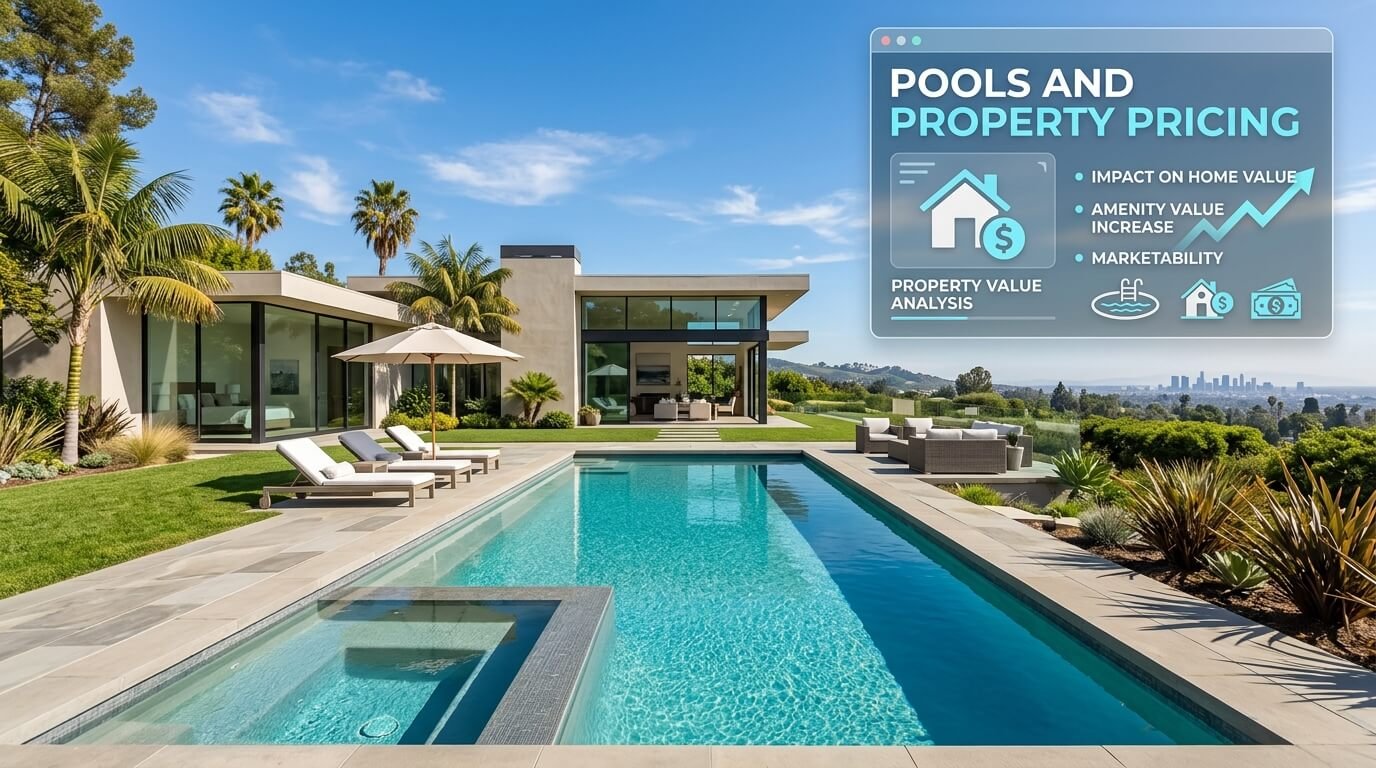
A swimming pool can completely change the character of a property. For some buyers, it represents relaxation, entertainment, privacy, and a more enjoyable outdoor lifestyle. For others, it means additional maintenance, higher utility bills, and ongoing repair costs. Because of these different views, the connection between Pools and Property Pricing is more complicated than simply adding the cost of a pool to the value of a home.
How Pools and Property Pricing Are Connected
The relationship between Pools and Property Pricing depends heavily on the local housing market. In warm regions where residents can use a pool for much of the year, a well-maintained swimming pool may be considered an important property feature. Buyers in these areas can be more willing to pay extra for a home that already has an attractive pool.
In colder climates, however, a swimming pool may have less influence on the final selling price. A shorter swimming season can make buyers question whether the expense and maintenance are worthwhile. The same pool that adds appeal in one city may have little effect on value in another location.
| Quick Fact | Details |
|---|---|
| Main topic | Pools and Property Pricing |
| Property impact | Can increase or decrease buyer appeal |
| Major factors | Location, pool condition, size, design, maintenance |
| Best suited for | Warm climates and lifestyle-focused markets |
| Key consideration | Buyer demand and total ownership cost |
Do Pools Increase Property Value?
A pool can increase property value when it matches what buyers in the area actually want. A modern pool with an attractive patio, quality landscaping, and useful outdoor features can make a home stand out among comparable properties. The overall presentation often matters just as much as the pool itself.
However, homeowners should not assume that every dollar spent on a pool will return as additional property value. Construction costs can be substantial, while buyers may value the feature differently. The financial return depends on the neighborhood, property type, pool quality, and current demand.
Pools and Property Pricing in Warm-Weather Markets
Warm-weather markets often have a stronger relationship between pools and property prices. When residents can use outdoor spaces for a large portion of the year, a pool becomes more than a decorative feature. It can become an important part of everyday living and family entertainment.
Buyers in these markets may specifically search for homes with private pools. This can increase competition for properties that offer attractive outdoor spaces. Still, location remains important because demand can vary significantly between neighborhoods, even within the same city.
Why Pool Condition Matters
The condition of a swimming pool can have a major effect on how buyers perceive a property. A clean, well-maintained pool with functioning equipment can create an immediate impression of quality. Cracked surfaces, outdated equipment, poor drainage, or neglected landscaping can have the opposite effect.
A buyer may see an aging pool as a future expense rather than an advantage. If repairs are likely to be necessary soon after purchase, buyers may negotiate for a lower price. For this reason, regular maintenance can protect both the appearance and financial appeal of a property.
Pool Design Can Influence Buyer Appeal
Not all pools have the same effect on property pricing. A pool that fits naturally into the backyard can make the entire outdoor area feel more useful and attractive. Good proportions, comfortable surrounding spaces, lighting, landscaping, and practical access can all improve the experience.
Oversized or poorly positioned pools can create different problems. They may reduce usable yard space or make the property less appealing to families who want room for children, pets, gardens, or outdoor activities. A pool should complement the property rather than dominate it.
Pools and Property Pricing for Luxury Homes
Luxury properties often have a different relationship between pools and property prices. High-end buyers may expect premium outdoor amenities as part of the overall package. Features such as infinity edges, heated water, spas, outdoor kitchens, covered seating, and sophisticated lighting can contribute to the property’s appeal.
Even in the luxury market, quality and design remain essential. An expensive pool that looks outdated or requires major repairs may not provide the expected advantage. Buyers at higher price points generally evaluate the entire property, including architecture, landscaping, location, privacy, and outdoor amenities.
The Cost of Owning a Swimming Pool
Before adding a pool, homeowners should consider the long-term cost rather than focusing only on construction. Regular expenses can include cleaning, chemicals, electricity, water, equipment servicing, repairs, and seasonal preparation. Over time, these costs can become significant.
Major components may eventually need replacement or renovation. Pumps, filters, heaters, liners, surfaces, and other equipment do not last forever. A homeowner considering a new pool should therefore calculate expected running costs and compare them with potential benefits to the property’s appeal.
Can a Pool Hurt Property Pricing?
In some situations, a swimming pool can make a property harder to sell or reduce its appeal to certain buyers. A neglected pool may signal expensive repairs, while a small backyard dominated by water may discourage buyers who prefer open outdoor space.
Safety concerns can also influence buyer decisions. Families with young children may carefully consider fencing, gates, access, and supervision requirements. Some buyers simply do not want the responsibilities associated with pool ownership, regardless of how attractive the feature may be.
How Location Changes Pool Value
Location is one of the strongest factors affecting the relationship between Pools and Property Pricing. A pool in a neighborhood where similar homes commonly have pools may be viewed as an expected feature. A pool in an area where they are uncommon may have a smaller financial impact.
Comparable properties provide useful clues. Looking at recently sold homes with and without pools can help homeowners understand how buyers are responding to the feature. Asking prices alone are not enough because they do not necessarily represent the final amount paid.
Should You Build a Pool Before Selling?
Building a pool shortly before selling a home can be risky. Although a new pool may make the property visually impressive, construction costs are not always recovered through the sale price. The decision should be based on local demand rather than assumptions about resale value.
If the property is located in a pool-friendly market and competing homes commonly offer swimming pools, the investment may make more sense. If buyers in the neighborhood generally prefer larger yards or lower-maintenance homes, the project could provide a weaker financial return.
Improving a Pool’s Effect on Property Pricing
Homeowners can improve the contribution of a pool by keeping the entire outdoor area attractive and functional. Clean surfaces, healthy landscaping, comfortable seating, proper lighting, and well-maintained equipment can make the space feel ready for immediate use.
Small improvements can sometimes make more sense than a complete renovation. Replacing worn furniture, improving lighting, repairing damaged surfaces, or updating outdated equipment may provide a noticeable improvement without the cost of rebuilding the entire pool.
Pools and Property Pricing During a Home Sale
When selling a property with a pool, presentation matters. The pool should be clean, the water should look inviting, and surrounding areas should be free from clutter. Buyers should be able to imagine themselves using the space rather than focusing on maintenance problems.
Providing records of regular servicing can also help. Documentation showing that equipment has been maintained and repairs have been completed may give buyers greater confidence. A professional property valuation can provide additional insight into how the pool affects the home’s overall market position.
Final Thoughts on Pools and Property Pricing
The connection between Pools and Property Pricing depends on much more than the presence of water in a backyard. Location, buyer expectations, pool condition, design, maintenance costs, and the overall quality of the outdoor space all influence how buyers respond.
For homeowners, the smartest approach is to consider both lifestyle and financial factors. A pool can be a valuable addition when it fits the local market and the property naturally. When carefully designed and properly maintained, it can make a home more enjoyable while potentially strengthening its appeal to future buyers.
Frequently Asked Questions
Does a swimming pool always increase home value?
No. A pool can increase buyer appeal, but its financial effect varies by location, market demand, condition, design, and property type. Some buyers consider a pool a major benefit, while others see it as an ongoing expense.
Are pools more valuable in warm climates?
Generally, pools tend to have stronger buyer appeal in warm climates because they can be used for more months of the year. Local buyer preferences and neighborhood standards still play an important role.
Can an old pool reduce a home’s selling price?
Yes. If a pool requires major repairs or has outdated equipment, buyers may view it as a financial burden. Maintenance records and a professional inspection can help clarify its condition.
Should I install a pool to increase my property’s value?
Not necessarily. Installing a pool is a major investment, and the full cost may not be recovered when the property is sold. Researching comparable homes and local buyer demand is important before starting construction.
What pool features can improve buyer appeal?
A well-maintained pool, attractive landscaping, quality outdoor seating, effective lighting, modern equipment, and a practical surrounding patio can make the space more appealing. The best features are those that fit the property’s location and target buyers.
